
How to choose the right protective case?
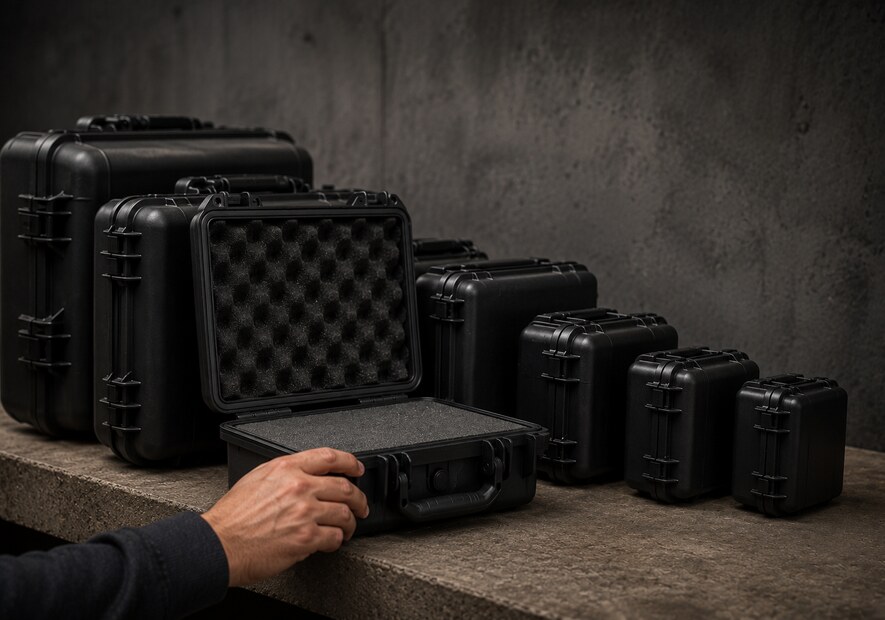
Protection rating: IP67 vs IP65
The second digit of the IP code shows water protection. IP65 withstands pressurised water jets from any direction; IP67 tolerates brief immersion in water (down to 1 m, up to 30 minutes). The first digit (6) means both are fully dust-tight.
In practice: IP65 is enough for dry indoor transport and covered storage. If the case may face rain, muddy sites or water (a boat, field measurements), choose IP67. Most of the AGESCASE, Peli™, MAX and Panaro cases we keep in stock are IP67.
Interior: foam insert or dividers
There are two common ways to keep equipment in place:
- Custom foam insert (layered pick-and-pluck or CNC-cut) — holds the device precisely and absorbs impacts. Suited to delicate, expensive equipment: cameras, measuring instruments, optics, firearms.
- Adjustable dividers — a flexible option when the contents change often, such as tools and gear.
If you always pack the same kit, a custom-cut foam is the most secure. If the contents change, dividers are the more sensible choice.
Size, weight and latches
- Size: measure the device and allow foam margin — a foam insert needs about 2–3 cm on each side, plus its own thickness on the lid side.
- Weight: if you travel by air, check that the case fits carry-on dimensions and the permitted weight.
- Latches and seal: snap latches, a surrounding seal and a pressure-equalisation valve (which balances changes in altitude and temperature) are standard on a waterproof case. For extra security, look for padlock holes.
When to order a custom solution
If there is no suitable standard option for your device, or you need a logo OEM case, we cut a foam insert to exact measure by CNC at our factory in Paide. Custom orders usually take 2–4 weeks.
See the custom foam inserts page or get in touch — we'll help you choose the right case and interior.
